Campaign Update — February 2026
There's something meditative about planning what to carry on your back for 80 days.
Every item becomes a question: Do I need this? Will I regret bringing it? Will I regret not bringing it?
For the past few weeks, I've been deep in the details — not because I'm obsessive (okay, maybe a little), but because what you carry changes how you walk. And how you walk changes the entire experience.
The weight of everything
Long-distance walkers develop what people call a "superpower" — hypersensitivity to weight. I've read stories of henro mailing home entire bags of "essentials" after the first week. That extra book? The backup shoes? The "just in case" jacket? They all get shipped back.
So the challenge is this: bring only what I actually need, but don't under-pack so much that I'm miserable.
My target: keep the base weight under 8-9 kg (excluding water and food). That means every single item has to earn its place.
What's coming with me
I'm still finalizing the full list, but here's the core:
Shelter & sleep
Lightweight tent (for budget stretching between minshuku stays)
Compact sleeping bag rated for spring temperatures
Sleeping pad
Clothing
3-4 sets of quick-dry clothing (I'll be doing laundry every few days)
Five-toe socks (Japanese invention — they prevent blisters by eliminating toe friction) (I might switch these to a setup recommended by my brother later down this post)
Polartec Alpha Direct material for layering (super lightweight, breathable) (Recommended by Patryk — the creator of WalkPrep. More on that later)
Rain jacket (breathable — learned the hard way that cheap ponchos = sweat traps)
Traditional white hakui vest (the garment representing purity)
Footwear
Proper trekking shoes (probably my most important purchase)
Camp sandals for rest days
Journey essentials
Kongōzue (walking staff — represents Kōbō Daishi walking with you)
Sugegasa (traditional straw hat) or a baseball cap
Nōkyōchō (stamp book — each temple stamp costs ¥300)
Osamefuda (name slips to leave at temples)
Copy of the Heart Sutra 💚
Electronics & navigation
Phone (navigation + sharing the journey)
Pocket WiFi / data SIM for connectivity
Compact charger
iPad (for taking notes and writing)
Medical & practical
First aid kit with blister treatment supplies
Sunscreen, chapstick, insect repellent
Water purification tablets
Water container
Headlamp (for early starts or late arrivals)
Toothbrush (manual :())
a Pen / Sharpie
Cleaning supplies
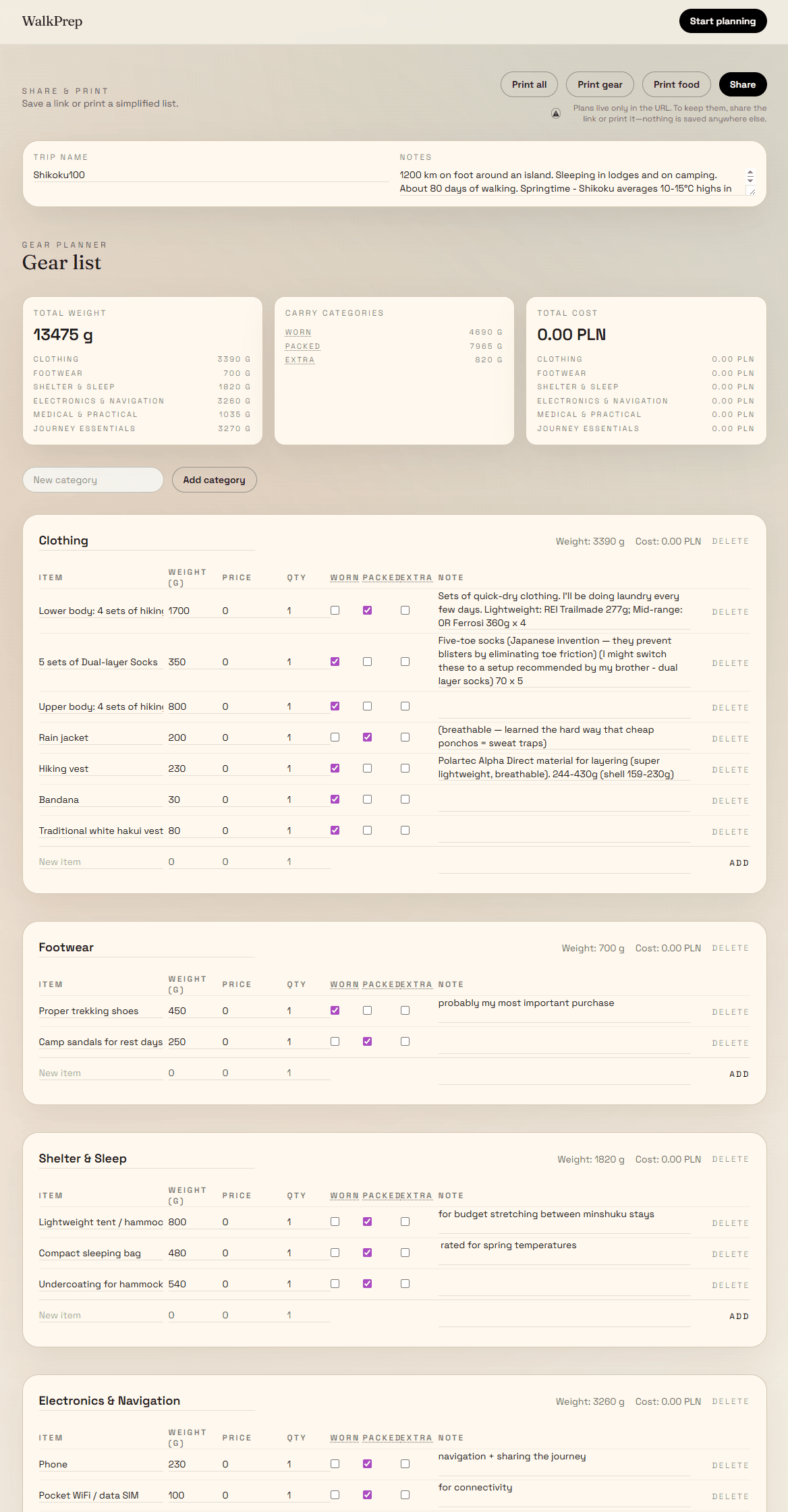
A more detailed list in WalkPrep:
Planning with WalkPrep
I owe a shout-out to my friend who created WalkPrep — an app specifically designed for planning long-distance trips and gear lists. It's been incredibly helpful for organizing everything, tracking weights, and visualizing different packing configurations.
If you're planning any kind of multi-day trek, check it out at https://walkprep.com/. It makes the whole process way less chaotic (and helps you catch those "Wait, I forgot to pack what?" moments before you actually forget).

The shoe situation (and my brother's advice)
If there's one thing every walking wayfarers obsesses over, it's shoes.
Because here's the reality: I'm going to walk roughly 1,200 kilometers. That's about 1.5 million steps. If my shoes are wrong — even slightly wrong — those steps become torture.
My brother called
My brother called me last week. He's done long-distance hiking before, and he had some advice.
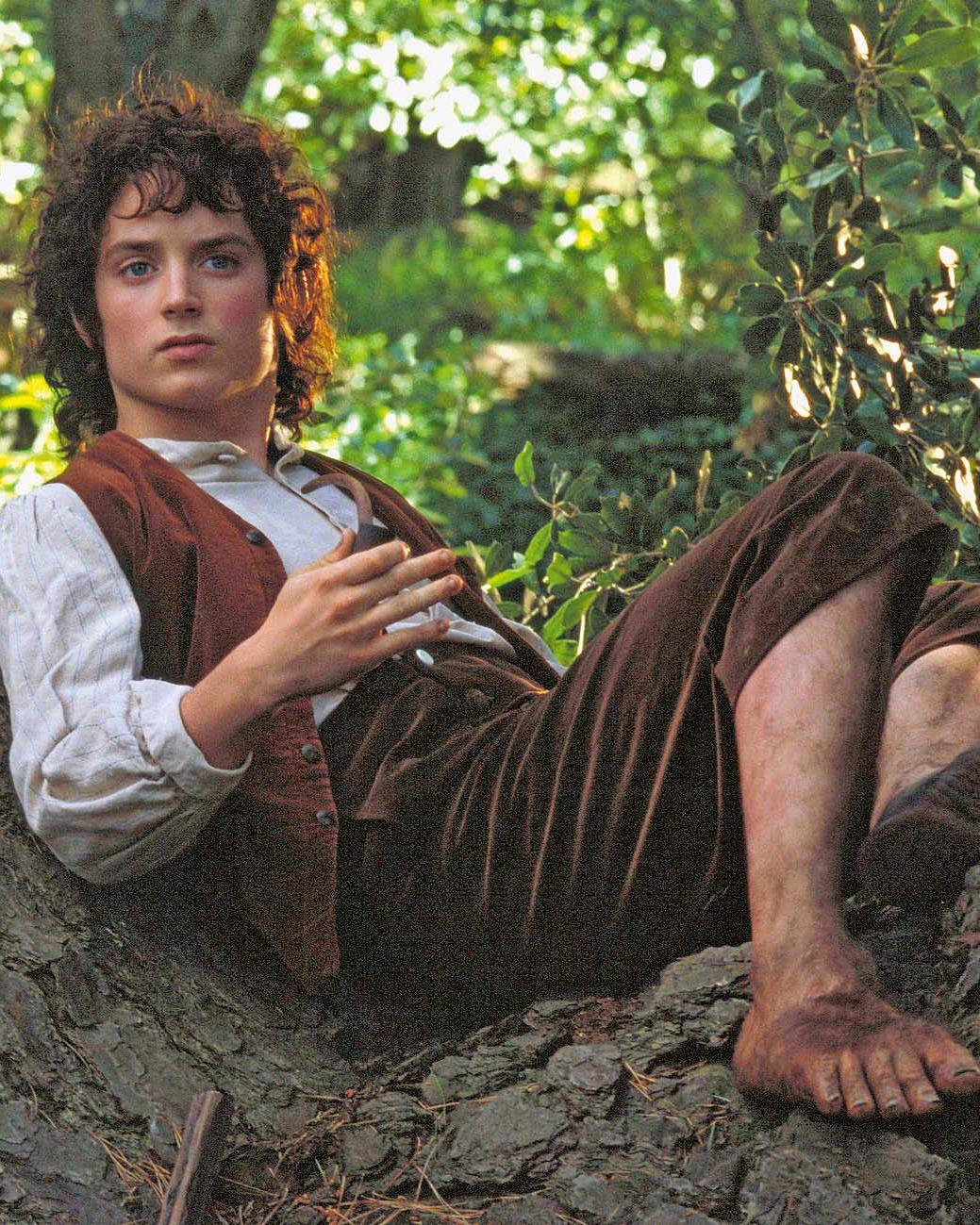
"You need to remove 'the hobbit' from your feet before you go," he said.
I laughed. We both love The Lord of the Rings — he knows those books better than I do — so the reference landed perfectly. But he was serious.
"The hair. It rubs against your skin when you're walking that much. It'll get uncomfortable fast."
I hadn't thought about that. But he's right. Every little friction point compounds over 1,200 km.
The two-layer sock system
Then he told me about socks.
"Wear two layers. First layer bamboo, second layer merino wool. It keeps your feet dry and reduces blisters."
Simple advice. But the kind you don't figure out until it's too late.
Walk the shoes first
And finally: "Whatever shoes you buy, use them some before walking such great distances."
He's right. I need to know if something's wrong now — not on Day 3 in rural Shikoku.
So that's the plan:
De-hobbit the feet
Get bamboo + merino wool socks
Break in the shoes properly before I go
Find out what works while I still have time to adjust
The walking itself
25 kilometers per day doesn't sound like much until you do it every single day for 48 days.
I'm fit. I walk regularly. But there's a rhythm that develops on long-distance walks — or so I've read. A pace your body finds when it realizes this isn't a day hike, it's a way of life for the next seven weeks.
The walk is a journey in itself. The walking is the practice. One foot. Then the other. For 1,200 kilometers.
My brother gets that. His advice wasn't just about socks and hair — it was about respect for the distance.
So I'm listening 🙏
The philosophy behind the pack
Here's the thing: I could go ultralight. I could strip everything down to absolute minimums, camp wild every night, eat convenience store onigiri for 48 days straight.
But that's not why I'm doing this.
I'm walking the Shikoku Henro the traditional way — staying in local guesthouses when possible, eating at local establishments, supporting the communities who've kept this path alive for centuries. The journey isn't just about me and the trail. It's about the people, the culture, the infrastructure that makes this ancient practice possible.
So my pack reflects that balance: light enough to walk 25 km a day without destroying my back, but not so stripped down that I miss the point of the journey.
What I'm still figuring out
Honestly? I'm still wrestling with a few decisions:
How much tech to bring (do I need a laptop for creating those 100 posters on the road, or wait until after?)
Sleeping bag vs. quilt (weight vs. versatility)
How many "just in case" items are worth their weight
I'll figure it out. Part of the journey is accepting that I won't get everything perfect — and that's okay.
The real test
The backpack is already drafted. The gear list is almost finalized. In a few weeks, I'll actually wear this thing for 8+ hours a day, for 48 days straight.
That's when I'll find out if I planned well.
But for now, there's something grounding about this process. Every zipper, every strap, every choice is a small commitment to the path ahead.
If you'd like to support this journey, the campaign is still live at [link]. Every contribution helps make this walk possible — and brings those 100 posters one step closer to reality.
Thank you for following along. More updates soon.
— Janek